
Essential Ebike Maintenance Tools for Your Garage and Roadside
Why Every Ebike Owner Needs a Proper Repair Kit
An ebike repair kit is a collection of tools and spare parts that lets you fix the most common problems on your electric bike — whether you’re at home in the garage or stranded on a trail.
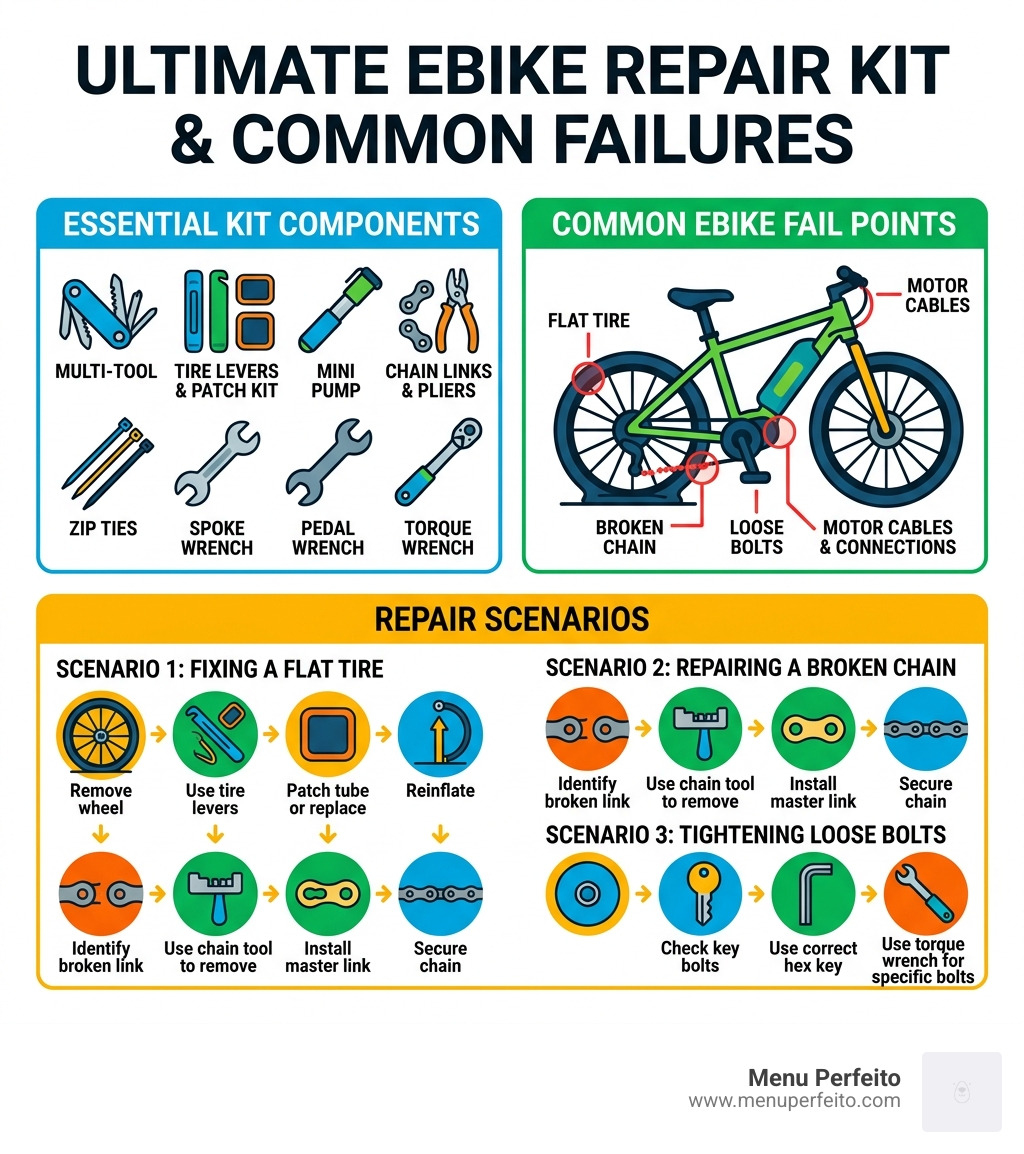
Here’s what a solid ebike repair kit should include:
- Multi-tool with hex/Allen keys, screwdrivers, and chain tool
- Tire levers and patch kit for flat tires
- Mini pump (look for one that handles both Presta and Schrader valves)
- Chain links and chain pliers for broken chain repairs
- Zip ties for quick, temporary fixes
- Spoke wrench for wheel truing
- Pedal wrench for pedal removal and installation
Ebike-specific kits may also include electrical components like torque wrenches, connector tools, or modular diagnostic parts for motor and controller issues.
Most cyclists already know that a flat tire can happen anywhere. But ebikes add extra complexity — heavier frames, motor cables, and battery systems mean more things can go wrong, and some of those problems won’t be solved by a bicycle kit.
The good news? You don’t need to be a mechanic. Most common repairs — flat tires, dropped chains, loose bolts — can be handled with a compact kit and a little confidence.
Whether you just picked up your first ebike or you’ve been riding for years, having the right tools on hand saves money, prevents long walks home, and keeps your bike performing its best all year long.
Essential Components of a Modern Ebike Repair Kit
When we talk about an ebike repair kit, we are looking for a balance between weight and utility. In April 2026, the standard for a “complete” kit has evolved. Because ebikes are heavier and travel at higher average speeds than traditional bikes, the vibrations can loosen bolts more quickly, and the high torque from the motor puts extra strain on the chain.
The Core Toolkit
At the heart of any kit is a high-quality multi-tool. We recommend a 16-in-1 Repair Toolkit that includes socket hex wrenches (8/9/10mm), slotted and Phillips screwdrivers, and a range of hex keys from 2mm up to 6mm.

For roadside tire issues, you cannot rely on luck. You need sturdy tire levers-preferably made of reinforced plastic to avoid scratching your rims-and a vulcanizing patch kit or self-adhesive “glueless” patches for faster fixes. A mini pump is non-negotiable; look for models rated up to 120 PSI that support both Presta and Schrader valves.
Summary of Kit Variations
| Feature | Basic Roadside Kit | Professional Garage Setup |
|---|---|---|
| Primary Goal | Get you home safely | Long-term maintenance & tuning |
| Portability | High (fits in saddle bag) | Low (stationary) |
| Tire Tools | Mini pump, patches, levers | Floor pump, sealant, spare tires |
| Drive Train | Chain tool, master links | Chain wear indicator, degreaser |
| Electronics | Zip ties, basic multi-tool | Diagnostic kit, contact cleaner |
| Torque Control | Felt by hand (risky) | Precision torque wrench (essential) |
Ebike-Specific Tools for Batteries and Electronics
This is where traditional bike kits fall short. An ebike is a vehicle with an electrical nervous system. We often suggest carrying a modular diagnostic kit for long-distance adventures. These “rescue packs” allow you to swap components like the LCD display, controller, or thumb throttle one at a time to isolate a fault.
You should also be aware of your connector types. Most modern systems use standardized 9-pin motor cables or specific 10.4mm connectors. Keeping a small bottle of electrical contact cleaner in your garage can prevent “ghost” errors caused by moisture or dust in these ports.
Finally, we cannot stress the importance of a torque wrench enough. Ebikes are built to specific safety standards like UL 2849. Over-tightening a bolt on a battery mount or motor housing can crack expensive casings, while under-tightening can lead to components shaking loose at 28 mph.
Selecting a Portable Ebike Repair Kit for Adventures
When you’re out on the road, you want a compact roadside repair kit that doesn’t feel like a lead weight. Many modern kits now feature a “roll-up” design made of durable polyester. These are fantastic because they can be wrapped around the bike frame or tucked between handlebars using Velcro straps.
One feature we love seeing in 2026 is QR code support. Some top-tier kits now print a QR code directly on the tool bag that links to a digital help center. If you’re stuck on the side of the road and can’t remember how to use a chain tool, you just scan the bag with your phone for a video tutorial.
Roadside vs. Garage: Choosing Your Setup
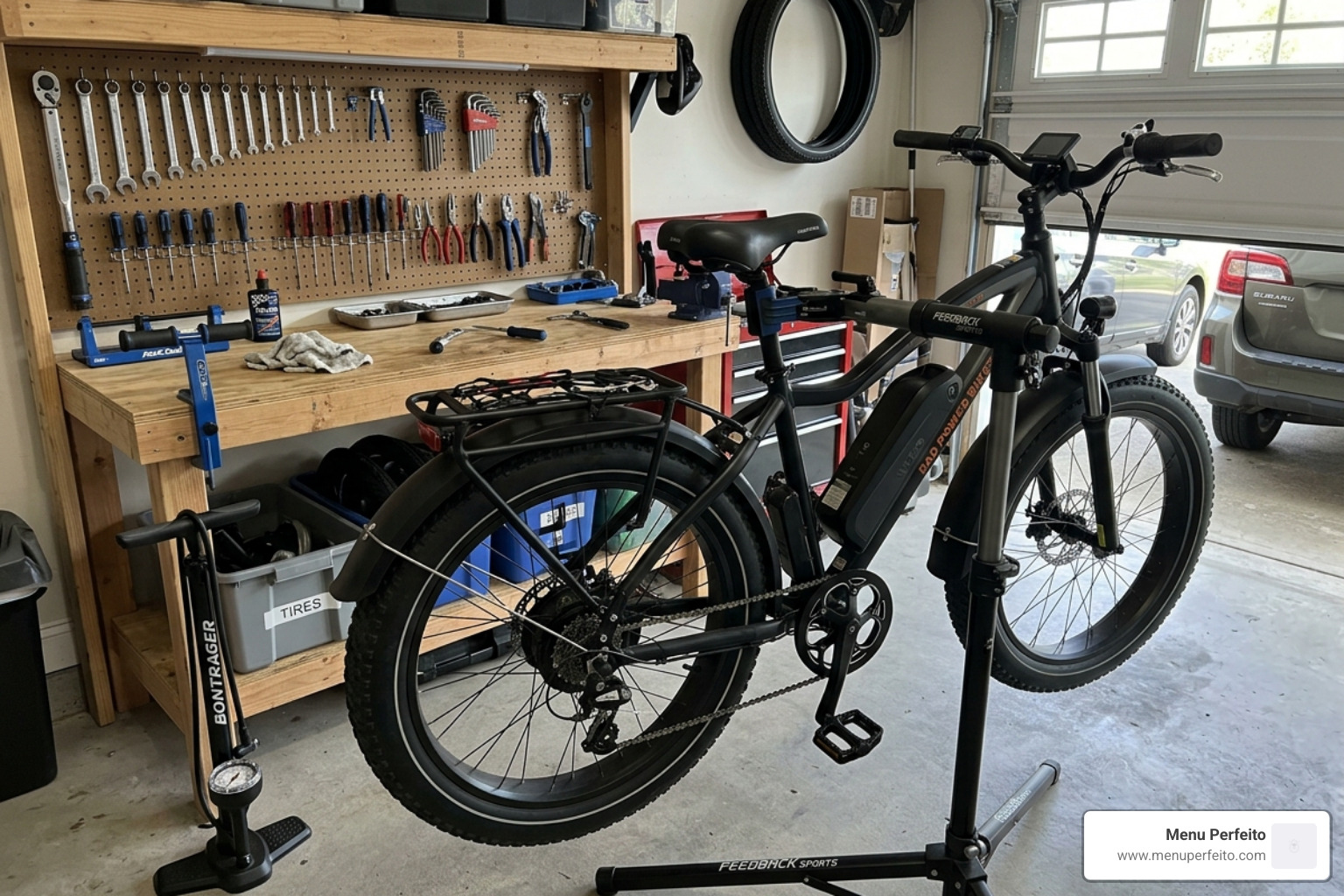
We believe every rider needs two “stations”: a portable one for the road and a comprehensive one for the garage. Your garage is where you do the preventative work that ensures you never have to use your roadside kit.
The Garage Essentials
In your home workshop, you have the luxury of space. A sturdy floor pump with a large pressure gauge is much easier to use than a mini pump. You should also invest in a work stand; ebikes are heavy (often 50-80 lbs), and trying to adjust a derailleur while holding the bike up is a recipe for a sore back.
Other garage must-haves include:
- Ebike-specific chain lubricant: These are formulated to handle the higher torque of mid-drive motors.
- Pedal wrench: For swapping pedals or tightening them after the first 100 miles.
- Cleaning rags and soft brushes: Keeping grit away from your motor seals is the best way to extend the life of your bike.
- Spoke wrench: Ebikes put a lot of stress on wheels; checking for loose spokes once a month is a pro move.
User-Friendly Features for Riders Over 50
We’ve noticed a huge surge in riders over 50 joining the ebike community. If you fall into this bracket, you might find that traditional, tiny bike tools are fiddly or hard on the joints. When choosing an ebike repair kit, look for these “senior-friendly” features:
- Ratchet Systems: Instead of a standard L-shaped hex key, a small ratchet handle provides much better leverage and is easier on the wrists.
- High-Visibility Markings: Large, laser-etched numbers on sockets and bits make it easier to find the right tool in low light.
- Ergonomic Grips: Tools with rubberized, thicker handles are easier to grasp if you have any hand fatigue or arthritis.
- Mechanical Advantage: Longer tire levers make popping a stubborn ebike tire off the rim significantly easier.
Common Roadside Repairs and Safety Precautions
The most common “emergency” is, without a doubt, the flat tire. Because many ebikes have hub motors, removing a wheel can be complicated by wires. This is why we recommend learning how to use a roadside repair tool kit to patch a tube while the wheel is still on the bike if possible.
Safety First: The Battery
Before you touch any mechanical part of your ebike with a tool, turn off the system and, if possible, remove the battery. This prevents the motor from accidentally engaging if you bump the throttle while working on the chain.
When handling the battery, these are high-capacity lithium-ion cells. Only use tools to tighten mounts; never attempt to “repair” the internal electronics of a battery yourself. If the casing is cracked or the battery is bulging, skip the toolkit and call a professional.
Trailside Brake Adjustments
Ebikes are heavy and fast, which means your brake pads will wear down faster than you’re used to. A common roadside fix is a quick barrel adjustment on your brake levers to tighten the feel. If you hear a rubbing sound, a multi-tool can be used to slightly loosen the caliper, realign it, and snug it back down.
Frequently Asked Questions about Ebike Maintenance
How much should a quality repair kit cost?
We see a wide range of prices in the market.
- Basic ($15–$30): Usually a 16-in-1 multi-tool and some plastic tire levers. Good for short commutes.
- Mid-Range ($45–$80): This is the “sweet spot.” These kits usually include a custom-fitted bag, a mini pump, a high-quality multi-tool, and sometimes a trailside repair kit with chain pliers and master links.
- Advanced/Diagnostic ($300+): These are modular packs designed for troubleshooting electrical failures. They aren’t necessary for everyone but are a lifesaver for bike packers and those living in remote areas.
Can beginners perform their own ebike repairs?
Absolutely! We encourage all our readers to try simple adjustments. You don’t need a mechanical engineering degree to fix a flat or tighten a loose fender. Most ebike manufacturers provide excellent YouTube tutorials specific to their models. Start with the basics: keep your tires inflated and your chain clean. If a repair involves opening the motor or the battery casing, that is your signal to head to a certified shop.
How do I securely mount a repair kit to my ebike?
Vibration is the enemy. If your kit is rattling, it’s wearing down your tools and potentially scratching your frame.
- Saddle Bags: Classic and out of the way, but make sure they don’t interfere with your rear light.
- Frame Bags: Great for weight distribution, especially on heavier ebikes.
- Velcro Straps: Many portable repair tool bags now use upgraded nylon Velcro that can wrap around the seat post or the main down tube. Ensure the straps are tight enough that the bag doesn’t slide into your pedaling path.
Conclusion
At Menu Perfeito, we believe that a little bit of preparation goes a long way. An ebike repair kit isn’t just a purchase; it’s an insurance policy for your adventures. By keeping a compact kit on your frame and a few specialized tools in your garage, you ensure that your ebike stays a reliable, joy-filled machine for years to come.
Remember to check your kit every season. Patches can dry out, and batteries in digital pressure gauges can die. Stay proactive with your maintenance, and you’ll spend more time riding and less time walking.
For more expert advice on battery care, seasonal upkeep, and DIY fixes, visit our main resource hub.
